Ancient Egyptian and Indian Heart Medicine

Our understanding of the human heart and cardiovascular system has evolved over thousands of years. Today’s evidence-based cardiology is grounded in advanced imaging, clinical trials, molecular biology, and large population studies. Yet, the roots of this knowledge extend deep into antiquity — especially in ancient medicine cardiovascular traditions found in Egypt and India. These early civilizations cared deeply about the heart’s role in life, disease, and wellness. While their theories differ from modern science, many of their observations foretold later discoveries and continue to influence traditional health systems like Ayurveda heart health practices today.
The Heart in Ancient Egypt: Central Organ and Life Force
Egyptian Medical Texts and the Heart
One of the most vital sources of ancient Egyptian medical knowledge is the Ebers Papyrus (circa 1550 BCE), one of the oldest and most extensive medical texts ever found. It contains a “treatise on the heart” that identifies the heart as the centre of the body’s vessels — an early depiction of the cardiovascular concept of fluid movement throughout the body.
In Egyptian belief, the heart was not only physical but also spiritual — the seat of intelligence, emotion, memory, and personality. Mummification practices even preserved the heart for the afterlife, showing its central symbolic role.
https://pubmed.ncbi.nlm.nih.gov/15067585/
Concepts of Blood, Vessels, and Pulse
Although the Egyptians did not know about blood circulation in the modern sense, their ancient medicine cardiovascular records reflect an intuitive connection between the heart and vessels. The Ebers Papyrus describes vessels leaving the heart and extending to all parts of the body — an insight into circulatory system.
Clinical scenarios in the same papyrus discuss “weakness of the heart” and congestion, which resemble early descriptions of heart failure.
https://pubmed.ncbi.nlm.nih.gov/16911907
Archaeological Evidence of Heart Disease
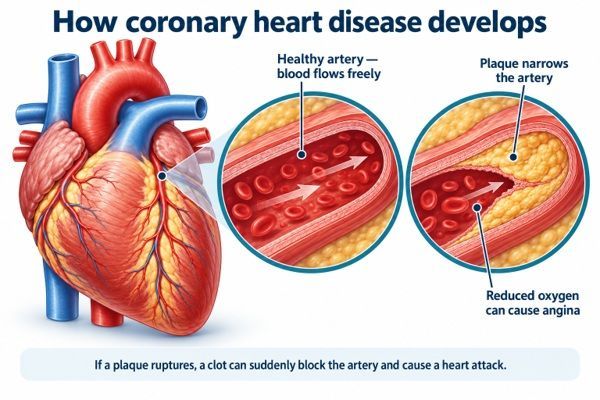
Modern research confirms that ancient Egyptians did not just conceptualize the heart — they suffered from cardiovascular conditions too. A computed tomography study of 52 Egyptian mummies found evidence of atherosclerosis, with arterial calcifications in aorta, coronary, carotid, and other arteries. This disease, a key modern cardiovascular pathology, was present even between 1550 and 1580 BCE. This finding constitutes the earliest documented evidence of coronary atherosclerosis in a human.
https://pubmed.ncbi.nlm.nih.gov/21466986/
Thus, long before stethoscopes and lipid panels, early humans encountered heart disease, underscoring the continuity between ancient health concerns and modern cardiovascular epidemiology.
Ancient Indian Medicine: Ayurveda and Heart Health
Foundations of Ayurveda
Ayurveda, a traditional Indian system dating back over two millennia, offers a rich body of knowledge about health and disease, including the heart. Its foundational texts include the Charaka Samhita and Sushruta Samhita, classic dissertations on medicine and surgery respectively.
Ayurvedic philosophy is holistic and according to it health results from balance among bodily energies (doshas), proper nutrition, lifestyle, and mental harmony. Within this system, the heart is understood both physically and energetically, and its disorders are classified based on different types of doshic imbalance.
Early Appreciation of Circulation
Intriguingly, some Ayurvedic texts allude to ideas reminiscent of circulatory concepts. Scholars have argued that early Ayurveda had a preliminary understanding of the cardiovascular system as a “closed circuit,” viewing the heart as a kind of pump — a notion that resonates with later Western findings on circulation.
https://pubmed.ncbi.nlm.nih.gov/22665419/
Ayurveda Heart Health Concepts
Ayurveda places great emphasis on supporting heart health through diet, herbs, lifestyle, and rejuvenation therapies (rasayana). Many herbs are documented to influence blood flow, lipid metabolism, and vascular function. Modern research supports moderate evidence for several of these botanical interventions.
For example:
- Terminalia arjuna, a tree bark long used in Ayurveda, is investigated for cardioprotective effects. Clinical and preclinical studies suggest it may benefit angina, hypertension, and dyslipidemia, although long-term safety and full clinical efficacy require further robust trials, according to an article published in 2014.
https://pmc.ncbi.nlm.nih.gov/articles/PMC4220499/
- A systematic review of randomized trials, published in 2021 concluded that Randomized controlled trials provide moderate to high-quality evidence that the Ayurvedic herbs guggulu, garlic, and black cumin are moderately effective in reducing hypercholesterolemia. Furthermore, these studies report minimal adverse effects, supporting their use as generally safe adjuncts to conventional lipid-lowering therapies.
https://pmc.ncbi.nlm.nih.gov/articles/PMC8229657
- The pooled findings from two trials suggest that Maharishi Ayurveda multimodality intervention programmes—including Transcendental Meditation, a heart-healthy Ayurvedic diet, exercise, and herbal food supplements—may promote regression of atherosclerotic cardiovascular disease, particularly among individuals at high cardiovascular risk.
https://pmc.ncbi.nlm.nih.gov/articles/PMC9223439/
Connections Between Egyptian and Indian Heart Thought
While ancient Egyptian and Ayurvedic traditions developed in different cultural and geographic contexts, both share a deep respect for the heart’s centrality to health. The Egyptians focused on observations and documentation of symptoms, pulse, and vessel connections. Ayurveda integrated physical, mental, and energetic frameworks — blending preventive philosophy with herbal therapeutics.
In both traditions, the heart was regarded as essential not only to life but also to a person’s overall well-being. These early historical cardiology perspectives laid philosophical foundations that would resonate into later eras of medicine and cardiology.
What We Can Learn from Ancient Heart Medicine
Although ancient Egyptian and Ayurvedic understandings of the heart differ from modern medical science, they offer enduring insights that remain meaningful today.
First, they emphasize a holistic perspective, viewing the heart not as an isolated organ but as part of an integrated body–mind system. This systems-based understanding aligns with contemporary recognition of the connections between emotional health, stress, lifestyle, and cardiovascular disease.
Second, these traditions underscore the importance of herbal remedies, diet, and lifestyle practices in supporting cardiovascular health. Many modern preventive strategies—such as nutrition, stress reduction, and physical activity—echo principles that were foundational in ancient healing systems.
Third, they remind us that heart disease is not solely a modern phenomenon. Evidence of cardiovascular conditions in ancient populations reveals that heart disease has deep historical roots, even if contemporary lifestyles influence its prevalence today.
While modern cardiology benefits from advanced diagnostics, pharmacology, and surgical interventions, the ancient emphasis on balance, prevention, and whole-person care remains highly relevant—particularly in the long-term management of chronic cardiovascular risk.
Conclusion
The story of heart medicine spans thousands of years, from the sacred temples of ancient Egypt to the holistic traditions of Ayurvedic practitioners and onward to today’s evidence-based cardiology. Although scientific explanations have evolved dramatically, humanity’s concern for protecting and healing the heart has remained constant. By appreciating the wisdom of ancient cardiovascular traditions alongside modern medical science, we gain a deeper and more nuanced understanding of how societies across history have conceptualized, treated, and cared for the human heart.
Full length article can be found here:
https://drbart.co.uk/ancient-heart-medicine-what-egyptians-and-indians-knew