The keto diet and your heart: pros and cons.

The ketogenic (“keto”) diet is famous for fast weight loss and better blood sugar control, and infamous for being a high-fat way of eating that can send LDL cholesterol soaring in some people. So is it dangerous or effective for your heart?
The most honest evidence-based answer is: keto can be metabolically effective for some people in the short term, but it can also raise cardiovascular risk in others—especially when it becomes a saturated-fat-heavy pattern or triggers big rises in LDL/ApoB. And we still lack large, long-term randomized trials with hard outcomes (heart attacks, strokes) that would settle the question cleanly.
This article walks through what research shows, why results vary so much from person to person, and how to think about the phrases people argue about online—keto heart disease, high fat diet cardiovascular, and low carb heart risk—without falling into hype or fear.
1) What “keto” really is (and why definitions matter)
A classic ketogenic diet typically means very low carbohydrate intake (often ~20–50 g/day or ~5–10% of calories), moderate protein, and high fat, producing measurable ketosis (blood β-hydroxybutyrate often ≥0.5 mmol/L). “Low carb” is broader: some studies call 20–40% of calories “low carb,” which may not be ketogenic at all.
That definition gap is one reason debates get not straightforward: studies on “low-carb” patterns can’t always be applied to strict keto, and vice versa.
2) Why keto might help the heart (at least on paper)
Cholesterol is only one component of heart health. Cardiovascular risk also changes with:
- body weight and visceral fat
- blood pressure
- triglycerides
- HDL to some degree
- glucose, insulin resistance, and HbA1c
- inflammation and fatty liver
For people with obesity, metabolic syndrome, or type 2 diabetes, keto often produces early improvements in several of these markers—mainly because carb restriction can reduce appetite and lower insulin levels, making it easier to lose weight and improve glycaemic control.
What the meta-analyses say about risk markers
Several systematic reviews/meta-analyses report that ketogenic or very-low-carb diets can improve weight, triglycerides, and glycaemic markers, sometimes more than control diets—especially in people with overweight/obesity or type 2 diabetes:
- A meta-analysis by Luo et al. from 2022 showed that low-carbohydrate ketogenic diets significantly improve key cardiovascular risk factors—including blood glucose control, body weight, and lipid profiles—in overweight and obese individuals. These benefits are particularly pronounced in patients with type 2 diabetes (T2DM) compared with those following non-ketogenic diets.
https://pmc.ncbi.nlm.nih.gov/articles/PMC9792675/
- A meta-analysis by Dong et al. from 2020 demonstrated that low-carbohydrate diets improve cardiovascular risk factors. However, further research is needed to determine their long-term effects on cardiovascular health.
https://journals.plos.org/plosone/article?id=10.1371/journal.pone.0225348
- A meta-analysis by Wang et al. from 2024 showed that although the ketogenic diet is associated with improvements in triglycerides, blood pressure, body weight, and glycemic control, its effects on cardiovascular disease (CVD) risk factors—particularly the potential increases in total cholesterol and low-density lipoprotein (LDL) cholesterol—necessitate a cautious and individualized approach.
https://ajcn.nutrition.org/article/S0002-9165%2824%2900445-3/fulltext
- A meta-analysis by Ghasemi et al. from 2024 demonstrated that individuals following a very low-calorie ketogenic diet (VLCKD) experience greater improvements in cardiovascular risk factors compared with those adhering to control diets.
https://link.springer.com/article/10.1186/s12986-024-00824-w
- National Lipid Association scientific statement (2019) showed that vverall, these diets are not superior to other dietary approaches for weight loss, although they may offer benefits in appetite control, triglyceride reduction, and decreased medication use in T2D management. The evidence regarding low-density lipoprotein cholesterol (LDL-C) is mixed, with some studies reporting increases, and no clear advantages have been demonstrated for other cardiometabolic markers. Importantly, limited data exist on their long-term efficacy and safety beyond two years, and clinicians should carefully consider the available evidence when advising patients.
https://www.lipidjournal.com/article/S1933-2874%2819%2930267-3/fulltext
If your personal “heart risk profile” is dominated by insulin resistance (high triglycerides, low HDL, hypertension, elevated glucose), keto diet can be beneficial according to the above evidence.
3) Why keto might harm the heart (the LDL/ApoB issue)
The controversy starts when keto raises LDL cholesterol and ApoB (a particle-number marker that tracks atherosclerotic risk in most populations). Some people see only mild LDL changes; others see more significant increases.
Evidence that keto can raise LDL/ApoB
Burén et al. in 2021 published a randomized, controlled crossover feeding trial, 24 women followed a 4-week ketogenic Low Carbohydrate High Fat diet and a 4-week control diet, separated by a 15-week washout period, to assess effects on LDL cholesterol and other cardiovascular risk markers. Among the 17 participants who completed the study, the LCHF diet significantly increased LDL cholesterol in every woman, along with apolipoprotein B-100 and both small, dense and large, buoyant LDL subfractions. These findings suggest that a ketogenic Low Carbohydrate High Fat diet may induce an unfavorable lipid profile in healthy young women, raising concerns about its cardiovascular implications.
https://pmc.ncbi.nlm.nih.gov/articles/PMC8001988/
Other meta-analyses and reviews also report that in some groups—particularly normal-weight individuals—ketogenic diets can increase LDL:
- A meta-analysis published by Joo et al. in 2023 showed that ketogenic diets may have unfavourable effects on total cholesterol and low-density lipoprotein cholesterol levels in normal-weight adults. Although increases in high-density lipoprotein cholesterol may partially offset adverse lipid changes, individuals with normal body weight should carefully consider the potential risk of developing high cholesterol when following a ketogenic diet. The findings regarding triglyceride levels were inconsistent.
https://pubmed.ncbi.nlm.nih.gov/36931263/
- State of the art review article by Popiołek-Kalisz et al. from 2024 concluded that the ketogenic diet does not meet established criteria for a healthy dietary pattern. While it may promote rapid short-term reductions in body weight, triglyceride levels, glycated hemoglobin, and blood pressure, its long-term effectiveness for sustained weight loss and metabolic improvement appears limited. With respect to cardiovascular mortality, moderately low-carbohydrate dietary patterns seem to offer greater benefit than very low-carbohydrate approaches, including the ketogenic diet. Evidence directly comparing the ketogenic diet with the Mediterranean diet remains limited. Future research should also address safety concerns in cardiovascular patients, including adverse effects related to ketosis, loss of fat-free mass, and potential interactions with medications.
https://www.sciencedirect.com/science/article/pii/S0146280624000410
- An older but influential meta-analysis by Nordmann et al. from 2006 showed that low-carbohydrate diets that do not restrict energy intake appear to be at least as effective as low-fat, energy-restricted diets for achieving weight loss over a period of up to one year. However, although these diets may improve triglyceride and high-density lipoprotein cholesterol levels, these benefits should be carefully balanced against the potential for increases in low-density lipoprotein cholesterol when considering low-carbohydrate approaches for weight management.
https://jamanetwork.com/journals/jamainternalmedicine/fullarticle/409791
And clinical literature has also highlighted a subgroup of people whose LDL can jump extremely high on strict keto:
- Schmidt et al. in 2023 showed that although ketogenic diet may promote weight loss and improve certain metabolic markers, some individuals experience marked elevations in cholesterol levels that could increase the risk of atherosclerotic cardiovascular disease (ASCVD). Further research is needed to clarify the mechanisms underlying this pronounced response and to determine its long-term clinical implications.
https://www.sciencedirect.com/science/article/pii/S2666667723000363
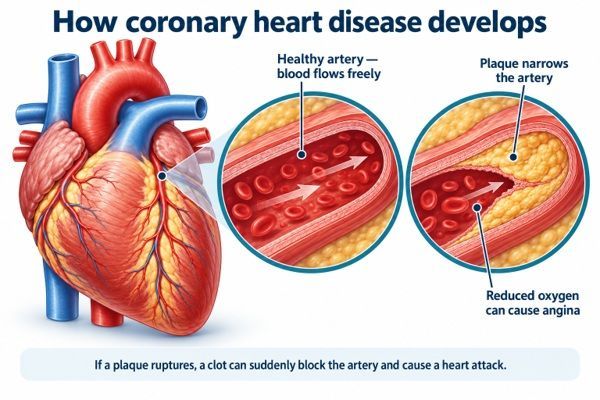
So the most evidence precise answer to “Does keto cause heart disease?” (keto heart disease) is that keto can markedly raise ApoB/LDL in some people, and high ApoB/LDL is a well-established causal factor for atherosclerosis in mainstream lipid science. The individual risk depends on how your lipids respond, your baseline risk, and what foods you use to “do keto.”
4) But does keto actually increase plaque burden or events?
Hard outcomes: still not settled
We do not yet have large, long-duration randomized controlled trials showing whether strict keto reduces or increases heart attacks/strokes compared with other diets. Most evidence is either:
- risk-factor changes (lipids, HbA1c, BP), or
- observational cohort studies of “low carb” patterns, or
- small prospective imaging studies in special populations.
Imaging studies in hyper-responders (interesting, but limited)
A recent line of research has looked at coronary plaque burden in people on ketogenic diets with very high LDL.
One study compared coronary plaque burden in lean mass hyper-responders on ketogenic diets with controls:
- Budoff et al. in 2024 published data that showed that in people who are otherwise metabolically healthy, those following a keto (very low-carbohydrate) diet for about five years—even if their LDL (“bad”) cholesterol rose to 190 mg/dL or higher—did not have more plaque buildup in their heart arteries than a similar group whose LDL cholesterol was much lower (by about 149 mg/dL on average). In both groups, higher LDL cholesterol levels were not linked to having more artery plaque.
Another prospective study (“Keto-CTA”) followed lean, metabolically healthy keto dieters with diet-induced LDL/ApoB elevations and assessed plaque progression:
- Keto-CTA (2025) report in JACC: Advances showed that in lean, otherwise healthy people following a ketogenic diet, the amount of “bad” cholesterol (LDL) and ApoB they had—either at the start or over time—was not linked to changes in plaque buildup in their arteries. Instead, the strongest predictor of future plaque growth was how much plaque they already had to begin with. In other words, in this group, existing plaque predicted more plaque, while cholesterol levels did not.
https://www.jacc.org/doi/10.1016/j.jacadv.2025.101686
These studies are not conclusive because of several limitations:
- special population (lean, often athletic, unusually high LDL responders)
- imaging time horizons are short relative to decades-long atherosclerosis
- design details (controls, confounding) matter a lot
Still, they underscore a critical point: keto’s “heart impact” may not be uniform—and single biomarkers (even ApoB) can be part of a bigger risk picture that includes baseline plaque, genetics, blood pressure, inflammation, and duration of exposure.
5) Observational “low-carb” studies: the quality of food matters
When people talk about low carb heart risk, they often cite cohort studies linking low-carb patterns to mortality or cardiovascular events. But the more careful cohorts distinguish between:
- low carb built from plant fats/proteins and unsaturated fats (healthier), vs
- low carb built from animal fats, processed meats, butter, and low-fiber foods (less healthy)
A widely cited cohort analysis found overall low-carb scores weren’t necessarily associated with mortality, but healthy vs unhealthy low-carb patterns diverged:
- A study by Shan et al. (2020) published in JAMA Internal Medicine, showed that simply following a low-carbohydrate or low-fat diet was not linked to living longer or shorter overall. However, the type of foods people ate made a big difference. When low-carb or low-fat diets were made up of less healthy foods (such as highly processed items or poor-quality fats and carbohydrates), people had a higher risk of death. When those diets focused on healthier foods (such as vegetables, whole foods, and high-quality fats or carbs), people had a lower risk of death. In other words, it’s not just about eating low-carb or low-fat — the quality and sources of the foods matter most.
https://jamanetwork.com/journals/jamainternalmedicine/fullarticle/2759134
Another large prospective study found U-shaped relationships between carbohydrate intake and mortality (higher mortality at very low and very high carb percentages), with nuance depending on what replaces carbs:
- Seidelmann et al. (2018) concluded in The Lancet Public Health that both very low-carbohydrate and very high-carbohydrate diets were linked to a higher risk of death, while the lowest risk was seen in people whose diets included a moderate amount of carbohydrates — about 50–55% of total calories. Among people who ate low-carbohydrate diets, the source of protein and fat made an important difference. Diets that relied mostly on animal sources — such as lamb, beef, pork, and chicken — were associated with higher mortality. In contrast, low-carbohydrate diets that emphasized plant-based sources of protein and fat — including vegetables, nuts, peanut butter, and whole-grain breads — were linked to lower mortality. These findings suggest that when it comes to carbohydrate intake and longevity, the types of foods you choose may matter more than the exact amount of carbohydrates you eat.
https://www.thelancet.com/journals/lanpub/article/PIIS2468-2667%2818%2930135-X/fulltext
This is why a blanket “high fat diet cardiovascular” claim can mislead. A high-fat diet built from olive oil, nuts, seeds, fish, and fibre-rich low-carb plants is not nutritionally equivalent to a high-fat diet built from processed meats + butter + minimal fibre.
Real-world “LCHF” (low-carb, high-fat) patterns vary enormously. Hagström et al. (2025) showed that in low-carbohydrate, high-fat group, differences in how much carbohydrate and saturated fat people ate did not predict any measures of heart disease risk. However, eating less fibre and consuming more cholesterol and sodium were linked to a less favourable cardiovascular risk profile.
https://pmc.ncbi.nlm.nih.gov/articles/PMC11957601/
6) Mechanisms: how the same diet can improve one person and worsen another
Why triglycerides often improve
Carb restriction tends to reduce hepatic de novo lipogenesis and lowers circulating triglycerides—especially in people with insulin resistance. Weight loss amplifies this.
Why HDL often rises
Lower triglycerides and shifts in lipoprotein metabolism can increase HDL cholesterol, though HDL’s causal role is complicated (raising HDL isn’t automatically protective).
Why LDL/ApoB can rise sharply in some
Several plausible contributors:
- higher saturated fat intake (especially butter, fatty red meat, coconut oil)
- low fibre intake reducing bile acid excretion
- energy balance shifts and weight loss dynamics
- genetic variation in lipid metabolism
- the “lean mass hyper-responder” phenotype (lean, low TG, high HDL, very high LDL on strict carb restriction)
This is why two people can post opposite lab panels from “keto”—and both be telling the truth.
7) Practical clinical interpretation: when keto may be reasonable—and when to be cautious
Keto may be most defensible when:
- primary goal is type 2 diabetes management, triglyceride reduction, or weight loss
- the diet is constructed with unsaturated fats (olive oil, nuts, seeds, avocado) and plenty of low-carb fibre sources (non-starchy vegetables, chia/flax, etc.)
- you track labs and adjust fast if LDL/ApoB rise substantially
Keto deserves extra caution when:
- you already have atherosclerotic cardiovascular disease (heart attack, coronary atheroma, ischaemic strokes), familial hypercholesterolemia, or high baseline ApoB/LDL
- keto pushes you toward lots of saturated fat and very low fibre
- your LDL or ApoB jumps dramatically
- you interpret improved triglycerides/HDL as “permission” to ignore very high ApoB
Popiołek-Kalisz et al. (2024) review summarises this tension well: rapid short-term improvements in weight and some metabolic markers, but limited evidence for long-term superiority and concerns about lipid changes in some people. https://www.sciencedirect.com/science/article/pii/S0146280624000410
And the National Lipid Association statement (2019) emphasizes that low-/very-low-carb diets are not clearly superior long-term and highlights the importance of monitoring lipids and risk. https://www.lipidjournal.com/article/S1933-2874%2819%2930267-3/fulltext
8) A “heart-smarter keto”
If you’re doing keto and want to minimize potential cardiovascular downsides, the evidence points toward shifting away from “bacon-and-butter keto” and toward a more Mediterranean-style low-carb pattern:
1) Prefer unsaturated fats
Olive oil, nuts, seeds, avocado; fish.
2) Limit saturated fat sources
Butter, coconut oil, heavy cream, large amounts of fatty red meat—especially if LDL/ApoB rises.
3) Don’t let fibre collapse
Fiber isn’t “optional.” Use non-starchy vegetables, ground flax/chia, psyllium (if tolerated), nuts/seeds, and other low-carb fibre strategies.
4) Track the right labs
If possible: ApoB, LDL, non-HDL, triglycerides, HbA1c, BP. Recheck after a meaningful adaptation period (often ~8–12 weeks).
5) If LDL/ApoB skyrockets, treat it as real
At minimum, modify fat sources and overall pattern; discuss with a clinician if you have other risk factors.
This is the most grounded way to engage the “low carb heart risk” question: it’s not simply “low carb = bad” or “keto = good,” it’s “what happens to your ApoB/LDL, and what foods are you using to keep carbs low?”
9) So… dangerous or effective?
Effective? Often, yes—especially for short-term weight loss and glycaemic control, and often with improvements in triglycerides and sometimes blood pressure.
Dangerous? Potentially—particularly if the diet becomes a saturated-fat-heavy pattern or if you’re someone whose LDL/ApoB rises dramatically.
Bottom line: Keto is not automatically heart-healthy or heart-harmful. The most defensible stance is conditional:
- If keto improves weight, glycaemic control, BP, triglycerides without materially raising ApoB/LDL, it may reduce overall cardiometabolic risk—especially in insulin-resistant individuals.
- If keto causes large, sustained elevations in ApoB/LDL (common in some phenotypes and some “high saturated fat” versions), the long-term atherosclerosis risk may increase—unless the diet is modified or other risk-reduction steps are taken.
That’s the real, evidence-based answer hiding behind the slogans keto heart disease, high fat diet cardiovascular, and low carb heart risk.