What is heart failure? Consultant cardiologist explains
Heart failure is a term that understandably worries many patients. One of the first things I explain in my cardiology clinic is that heart failure does not mean that your heart has stopped working, or that it is about to stop.
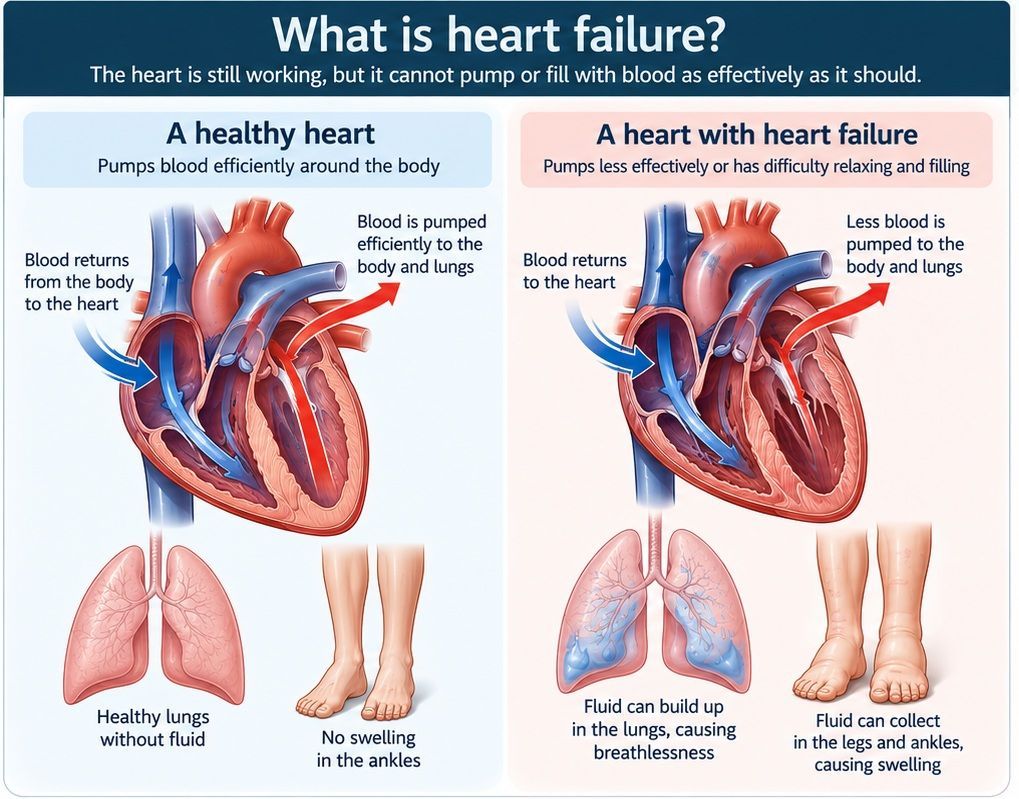
Instead, heart failure describes a condition in which the heart is unable to pump blood around the body as effectively as it should, or cannot relax and fill with blood normally. As a result, the body may not receive enough oxygen-rich blood during activity and fluid can accumulate, particularly in the lungs, legs and ankles.
Heart failure affects more than one million people in the UK and becomes increasingly common with age [1]. However, it is not simply an inevitable consequence of getting older.
Importantly, treatment of heart failure has changed dramatically. We now have medications, cardiac devices and other treatments that can improve symptoms, reduce hospital admissions and, in many patients, help people live longer.
In this article, I explain what heart failure is, its symptoms and causes, how it is diagnosed and how modern heart failure treatment works.
What exactly is heart failure?
Heart failure is a clinical syndrome rather than one single disease.
The international Universal Definition of Heart Failure describes it as symptoms and/or signs caused by a structural or functional abnormality of the heart, supported by evidence such as raised natriuretic peptide levels or congestion [2].
The heart has two important jobs.
It must relax sufficiently to fill with blood and then contract strongly enough to pump that blood around the body.
Heart failure can develop when either process becomes impaired.
This explains why somebody can have heart failure even when the percentage of blood pumped out of their heart appears relatively normal on an echocardiogram.
Does heart failure mean my heart is stopping?
No.
This is perhaps the most important misconception about heart failure.
The term sounds as though the heart is gradually stopping. In reality, most people diagnosed with heart failure have a heart that continues to pump but is working less efficiently, has become stiff, or is functioning under abnormal pressures.
Some people have relatively mild symptoms for many years. Others have more significant disease requiring several medications, specialist follow-up or occasionally implanted cardiac devices.
Heart failure is therefore better thought of as impaired heart function rather than a heart that has “failed” completely.
What happens to the body in heart failure?
When the heart cannot pump efficiently, several things can happen.
Firstly, less blood may reach the muscles and other organs during activity. This contributes to tiredness and reduced exercise capacity.
Secondly, pressure can build behind the heart.
If pressure increases on the left side of the heart, fluid can accumulate within the lungs. This causes shortness of breath, particularly during exercise and sometimes when lying flat.
If pressure increases on the right side, fluid may collect in the legs, ankles or abdomen.
The kidneys and hormonal systems also respond to reduced circulation by retaining salt and water. Initially this is the body’s attempt to maintain blood pressure and circulation, but persistent fluid retention can ultimately make heart failure symptoms worse.
What are the symptoms of heart failure?
Heart failure can develop gradually, which means early symptoms are sometimes dismissed as ageing, lack of fitness or weight gain.
Common symptoms include:
- shortness of breath during physical activity;
- becoming breathless doing activities that were previously comfortable;
- unusual tiredness or reduced stamina;
- swollen ankles, feet or legs;
- breathlessness when lying flat;
- waking at night feeling short of breath;
- rapid weight gain caused by fluid retention;
- abdominal swelling or bloating;
- persistent coughing, particularly at night;
- palpitations or awareness of an irregular heartbeat;
- dizziness or light-headedness.
The NHS similarly highlights breathlessness, fatigue, ankle or leg swelling and sudden weight gain among the symptoms of heart failure [3].
None of these symptoms proves that somebody has heart failure. Breathlessness, for example, has numerous possible causes including lung disease, anaemia, obesity and physical deconditioning.
That is why proper investigation is important.
When is breathlessness an emergency?
New or gradually increasing breathlessness should be medically assessed.
However, severe breathlessness at rest, sudden deterioration, chest pain, collapse or coughing pink/frothy sputum requires urgent medical attention.
If symptoms are severe or potentially life-threatening, call 999 rather than waiting for a routine cardiology appointment.
What causes heart failure?
Heart failure has many possible causes. Sometimes several factors are present in the same patient.
Coronary artery disease and heart attacks
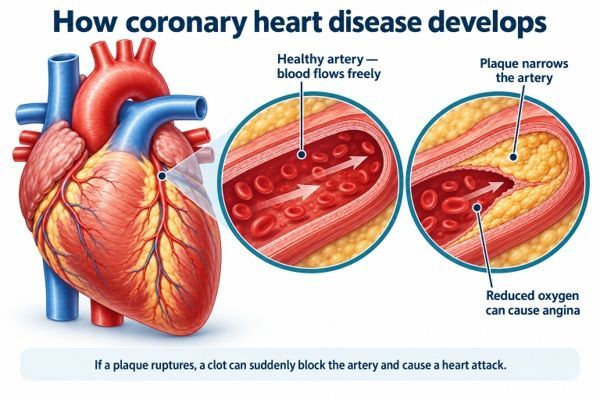
Coronary artery disease is one of the most important causes.
If a coronary artery becomes suddenly blocked during a heart attack, part of the heart muscle can become damaged. A large amount of damaged muscle may subsequently reduce the heart’s pumping strength.
High blood pressure
Long-standing hypertension forces the heart to pump against increased resistance.
Over many years, the heart muscle may thicken and become stiffer. Eventually this can interfere with its ability to relax and fill properly and can contribute to heart failure.
Heart valve disease
The heart contains four valves that ensure blood travels in the correct direction.
A valve that becomes severely narrowed or leaky can place considerable strain on the heart and eventually cause heart failure.
Cardiomyopathy
Cardiomyopathy means disease of the heart muscle.
There are several types and numerous potential causes, including inherited conditions, inflammation, certain infections, toxins and excessive alcohol consumption. Sometimes no clear cause is identified.
Abnormal heart rhythms
Atrial fibrillation and other persistently fast or abnormal rhythms can contribute to heart failure.
Conversely, heart failure itself makes certain arrhythmias more likely. The two conditions therefore commonly coexist.
Other causes include congenital heart disease, myocarditis and some chemotherapy treatments.
Identifying the underlying cause is an essential part of a cardiology assessment because treatment should address not only heart failure itself but, whenever possible, the reason it developed.
What is ejection fraction?
Patients with heart failure often hear cardiologists discussing their ejection fraction, or EF.
Ejection fraction is the percentage of blood within the left ventricle that is pumped out when it contracts.
It is usually measured during an echocardiogram.
Modern guidelines broadly classify heart failure as:
- Heart failure with reduced ejection fraction (HFrEF): LVEF of 40% or below.
- Heart failure with mildly reduced ejection fraction (HFmrEF): LVEF of 41–49%.
- Heart failure with preserved ejection fraction (HFpEF): LVEF of 50% or above, with additional evidence supporting abnormal cardiac function or raised filling pressures [4,5].
This distinction matters because treatment differs between these groups.
Can you have heart failure with a normal ejection fraction?
Yes — and this often surprises patients.
In heart failure with preserved ejection fraction (HFpEF) the heart may contract reasonably well but be abnormally stiff.
Imagine trying to fill a soft balloon compared with a thick, stiff balloon. The stiff balloon requires much more pressure even though it may still empty normally.
Something similar can happen in HFpEF. Pressure inside the heart rises because the ventricle does not relax normally. This increased pressure can then be transmitted backwards towards the lungs, causing breathlessness.
HFpEF is particularly associated with ageing, high blood pressure, obesity, diabetes, atrial fibrillation and kidney disease.
How is heart failure diagnosed?
Symptoms alone are not enough to diagnose heart failure.
A cardiologist will normally begin by discussing your symptoms, previous medical history, medication and cardiovascular risk factors, followed by a physical examination.
Several investigations may then be useful.
NT-proBNP blood test
NT-proBNP is released when the heart is under increased pressure or strain.
NICE recommends measuring NT-proBNP when heart failure is suspected [6].
In an untreated person, an NT-proBNP below 400 ng/L makes heart failure less likely. NICE recommends specialist assessment and echocardiography within six weeks for levels between 400 and 2,000 ng/L, and urgent assessment and echocardiography within two weeks when NT-proBNP exceeds 2,000 ng/L [6].
These numbers must always be interpreted in clinical context because age, kidney function, obesity, atrial fibrillation and medications can affect natriuretic peptide levels.
Echocardiogram
An echocardiogram, or heart ultrasound, is one of the most important tests.
It allows us to assess:
- ejection fraction;
- heart chamber size;
- heart muscle thickness;
- heart valve function;
- regional abnormalities of heart contraction;
- aspects of the heart’s relaxation and filling;
- pressure estimates within the heart and lungs.
An echocardiogram therefore provides much more information than simply an ejection-fraction number.
ECG
An electrocardiogram records the heart’s electrical activity and may identify atrial fibrillation, previous heart attack, conduction abnormalities or other clues to the cause of heart failure.
Further investigations may include blood tests, chest imaging, coronary artery assessment, cardiac MRI or heart-rhythm monitoring depending on the individual patient.
Can heart failure be treated?
Yes.
This is one area where cardiology has made substantial progress.
For heart failure with reduced ejection fraction, modern treatment is built around several groups of medications that target different biological pathways.
NICE’s updated guidance recommends an ACE inhibitor, evidence-based beta-blocker, mineralocorticoid receptor antagonist (MRA) and SGLT2 inhibitor for HFrEF, with treatment individualised according to clinical circumstances and tolerance [6].
Large clinical trials have transformed treatment.
ACE inhibition demonstrated survival benefits decades ago in the CONSENSUS trial [7]. Spironolactone substantially improved outcomes in selected patients in RALES [8]. The PARADIGM-HF trial subsequently demonstrated the benefits of sacubitril/valsartan compared with enalapril in appropriately selected HFrEF patients [9].
More recently, SGLT2 inhibitors have become fundamental heart-failure medications.
DAPA-HF showed that dapagliflozin reduced worsening heart failure or cardiovascular death in HFrEF, including in people without diabetes [10]. EMPEROR-Reduced produced complementary evidence for empagliflozin [11].
Treatment has also improved for patients whose ejection fraction is above 40%. EMPEROR-Preserved [12] and DELIVER [13] demonstrated important benefits of SGLT2 inhibition, helping to change international recommendations [14].
Diuretics — often called water tablets — remain extremely useful when fluid retention causes breathlessness or swollen legs, although their principal role is controlling congestion and symptoms.
Medication should always be tailored to the individual. Kidney function, potassium, blood pressure, heart rate, other medical conditions and potential side effects all need consideration.
Do some patients need pacemakers or defibrillators?
Yes.
Some people with reduced heart function and abnormalities of the heart’s electrical conduction may benefit from cardiac resynchronisation therapy (CRT).
CRT coordinates contraction of the ventricles and can improve cardiac performance in carefully selected patients. Trials including CARE-HF helped establish its role in heart failure treatment [15].
An implantable cardioverter-defibrillator (ICD) may be recommended for selected patients who have a sufficiently high risk of dangerous ventricular arrhythmias and sudden cardiac death.
These devices are not appropriate for everybody with heart failure, so assessment is individualised.
Can lifestyle changes help?
Absolutely — but lifestyle changes complement rather than replace evidence-based medical treatment.
Depending on the cause and severity of heart failure, useful measures may include:
- stopping smoking;
- taking medication consistently;
- remaining physically active at an appropriate level;
- participating in cardiac rehabilitation when offered;
- controlling blood pressure;
- maintaining a healthy weight;
- managing diabetes;
- moderating alcohol;
- following individual advice regarding salt and fluid intake;
- attending regular follow-up and blood tests.
Exercise is particularly important.
Patients were once frequently advised to rest because of heart failure. We now know that appropriately prescribed exercise and cardiac rehabilitation can improve exercise capacity and quality of life and may reduce hospital admissions [16,17].
The amount and intensity of exercise should, however, reflect the individual’s condition. Somebody with stable treated heart failure is very different from somebody experiencing an acute deterioration.
Can the heart recover from heart failure?
Sometimes.
In some patients, treatment produces substantial improvement in heart function and symptoms. The ejection fraction may even return towards the normal range.
This is sometimes called heart failure with improved ejection fraction (HFimpEF).
Improvement does not necessarily mean that the underlying tendency towards heart failure has disappeared. Stopping effective medication can allow cardiac function to deteriorate again, which is why treatment should not be discontinued simply because a scan has improved unless this has been discussed with the treating cardiology team.
Living with heart failure
A diagnosis of heart failure can initially feel frightening, but the outlook varies enormously between individuals.
The cause of the condition, severity of symptoms, heart function, kidney function, rhythm abnormalities, age, other illnesses and response to treatment all influence prognosis.
Most importantly, heart failure treatment today is very different from treatment even 15 or 20 years ago.
We now have multiple therapies supported by large randomised clinical trials. Specialist heart-failure care, modern medication, cardiac devices, rehabilitation and careful treatment of the underlying cause can make a substantial difference.
The key is early diagnosis, identifying the cause and introducing the right treatment promptly.
When should I see a cardiologist?
Consider seeking medical assessment if you have unexplained or progressively worsening:
- breathlessness;
- reduced exercise tolerance;
- ankle or leg swelling;
- persistent fatigue;
- difficulty breathing when lying flat;
- palpitations alongside breathlessness;
- or a history of heart disease with new symptoms.
These symptoms do not automatically mean you have heart failure, but they deserve appropriate investigation.
As a Consultant Cardiologist, my aim is not simply to determine whether heart failure is present. It is to understand why symptoms have developed, what type of heart failure is present and which treatment strategy is most appropriate for the individual patient.
Early assessment can provide reassurance when the heart is healthy — and allows treatment to begin promptly when a problem is identified.
Key message
Heart failure does not mean that your heart has stopped working.
It means the heart is unable to pump or fill as efficiently as the body requires. It can cause breathlessness, tiredness, reduced exercise capacity and fluid retention.
There are several different forms and many possible causes.
Modern heart failure treatment has advanced considerably, and early diagnosis followed by evidence-based, individualised treatment can improve symptoms, reduce hospital admissions and improve outcomes.
If you are concerned about new or worsening cardiac symptoms, arrange an appropriate medical assessment. Severe breathlessness, collapse or chest pain requires urgent medical attention.
This article provides general health information and does not replace individual medical assessment or advice.
References
- British Heart Foundation.
Heart and circulatory disease statistics / heart failure in the UK.
https://www.bhf.org.uk/what-we-do/news-from-the-bhf/contact-the-press-office/facts-and-figures - Bozkurt B, et al.
Universal definition and classification of heart failure. European Journal of Heart Failure. 2021;23:352–380.
https://onlinelibrary.wiley.com/doi/10.1002/ejhf.2115 - NHS.
Heart failure.
https://www.nhs.uk/conditions/heart-failure/ - McDonagh TA, et al.
2021 ESC Guidelines for the diagnosis and treatment of acute and chronic heart failure. European Heart Journal. 2021;42:3599–3726.
https://academic.oup.com/eurheartj/article/42/36/3599/6358045 - McDonagh TA, et al.
2023 Focused Update of the 2021 ESC Guidelines for acute and chronic heart failure. European Heart Journal. 2023;44:3627–3639.
https://academic.oup.com/eurheartj/article/44/37/3627/7246292 - NICE.
NG106: Chronic heart failure in adults: diagnosis and management — Recommendations. Updated 2025.
https://www.nice.org.uk/guidance/ng106/chapter/recommendations - CONSENSUS Trial Study Group.
Effects of enalapril on mortality in severe congestive heart failure. New England Journal of Medicine. 1987;316:1429–1435.
https://www.nejm.org/doi/10.1056/NEJM198706043162301 - Pitt B, et al.
The effect of spironolactone on morbidity and mortality in patients with severe heart failure (RALES). New England Journal of Medicine. 1999;341:709–717.
https://www.nejm.org/doi/full/10.1056/NEJM199909023411001 - McMurray JJV, et al.
Angiotensin–neprilysin inhibition versus enalapril in heart failure (PARADIGM-HF). New England Journal of Medicine. 2014;371:993–1004.
https://www.nejm.org/doi/full/10.1056/NEJMoa1409077 - McMurray JJV, et al.
Dapagliflozin in patients with heart failure and reduced ejection fraction (DAPA-HF). New England Journal of Medicine. 2019;381:1995–2008.
https://www.nejm.org/doi/full/10.1056/NEJMoa1911303 - Packer M, et al.
Cardiovascular and renal outcomes with empagliflozin in heart failure (EMPEROR-Reduced). New England Journal of Medicine. 2020;383:1413–1424.
https://www.nejm.org/doi/full/10.1056/NEJMoa2022190 - Anker SD, et al.
Empagliflozin in heart failure with a preserved ejection fraction (EMPEROR-Preserved). New England Journal of Medicine. 2021;385:1451–1461.
https://www.nejm.org/doi/full/10.1056/NEJMoa2107038 - Solomon SD, et al.
Dapagliflozin in heart failure with mildly reduced or preserved ejection fraction (DELIVER). New England Journal of Medicine. 2022;387:1089–1098.
https://www.nejm.org/doi/abs/10.1056/NEJMoa2206286 - McDonagh TA, et al.
2023 Focused Update of the ESC Guidelines. European Journal of Heart Failure. 2024;26:5–17.
https://academic.oup.com/eurjhf/article/26/1/5/8328860 - Cleland JGF, et al.
Long-term mortality with cardiac resynchronization therapy in the CARE-HF trial. European Journal of Heart Failure. 2012;14:628–634.
https://pubmed.ncbi.nlm.nih.gov/22552183/ - Taylor RS, et al.
Exercise-Based Rehabilitation for Heart Failure: Cochrane Systematic Review and Meta-Analysis. JACC: Heart Failure. 2019;7:691–705.
https://pubmed.ncbi.nlm.nih.gov/31302050/ - Molloy CD, et al.
Exercise-based cardiac rehabilitation for adults with heart failure — Cochrane systematic review and meta-analysis. European Journal of Heart Failure. 2023;25:2263–2273.
https://pubmed.ncbi.nlm.nih.gov/37850321/
This article provides general information and does not replace an individual medical assessment. Written with assistance of
AI, checked by
Dr Bart Olechowski for accuracy.